

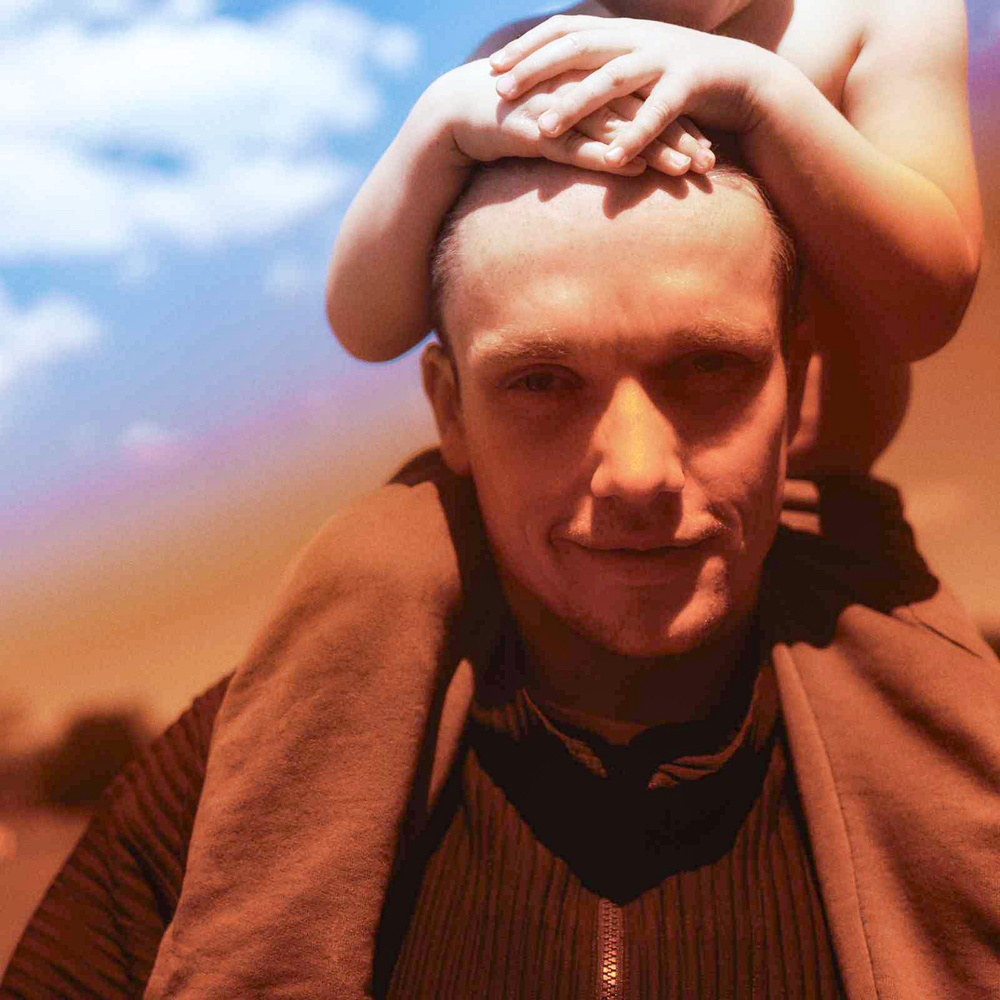
Composer and producer Oscar Powell has spent the last decade or so at the experimental end of electronic music. His latest LP We Do Recover is a masterful sonic meditation on grief and rehabilitation, crafted with an intriguing focus on Eurorack‑infused stochastic processes. Here Powell shares his thoughts on his favourite modules, the themes of the new album, and gives us a glimpse of what’s around the corner.
On his entry into modular
I didn’t like the whole modular thing for a long time. I found the sonic results rarely justified the spectacle in a live context: huge racks to make basic sounds that you could just as easily make with a laptop — and with more precision. There were exceptions, of course, and Russell Haswell — a great friend and, in many ways, mentor — was certainly one of those; he persuaded me to get a few things. I instantly liked the specificity of it: creating a system to perform very focused roles that fit with what I wanted to do. It was never a case of ‘let’s see what happens if I do this, this and this.’ It was always a case of how can I perform a particular task.
On his go‑to modules
The ADDAC Stochastic Function Generator is never too far away. The distribution of musical events, whether micro or macro, felt liberating to me; like programming the cosmos or something. It felt less like I was making music and more like I was forecasting geological events. With that module I was able to compose Piano Music 1‑7 on Editions Mego, stochastically distributing notes and pitches to drive a simple digital piano plug‑in. Considering I barely know where middle C is on a keyboard that was a thrill! I’m also a huge fan of ALM Busy Circuits. I have loads of their stuff but my favourite was always Akemie’s Taiko, the FM drum voice, because of that highly synthetic, digital rubbery twang you can get out of it and the complexity of combinations you can use to generate a single voice.
On making We Do Recover
It was a different kind of process for me — maybe a more personal record in many ways, rooted in my current experience of life, fatherhood and grief. It was a case of sifting through archives of stuff I had generated over the last five years or so, and collecting things together that I thought amounted to a story. Recently it’s been hard to find the time to actually generate or record like I had been for the decade prior, so it was quite liberating to take a different view, from above, and spend the time curating and editing things that had already been made. Again, most of the tracks were made using stochastic distributions so that’s probably a thread that connects the music somehow; it feels unruly and hard to predict, which has always been a sensation I enjoy in music and art.
On what’s next
There’s a bunch of music related to We Do Recover that is still to come out — WDR EP2, a follow up to WDR EP1. I also want to re‑immerse myself in the a folder project [afolder.studio] which is a cross‑disciplinary concept I created with Norwegian visual artist Marte Eknæs and Swiss filmmaker and animator Michael Amstad. I dream, also, of uprooting to a clifftop sometime, with a car full of stuff, to find the space and time for recording new material. Even if that kind of space and freedom is hard to come by with other responsibilities these days. Music goes in waves for me: some years I am active, some years less so. Accepting that it can’t be ‘always‑on’ like it once was for me is part of being an artist in a world and a culture that doesn’t make it easy for you to exist.
On the culture of modular
I have no idea about the culture of modular! I do what I do, and I use what I use. But beyond that, I have no relationship with it. To be honest, I couldn’t care less.