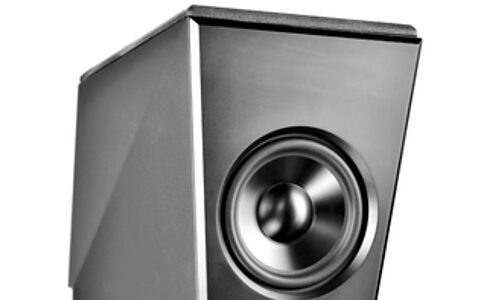
Genelec 8361A
Genelec’s high‑tech The Ones series has a new flagship model. We fire it up...
To find the exact phrase, put the words in quotes or join them together with a plus sign e.g. live+recording or "live recording".
To find, say, all live recording articles that mention Avid, enter: live+recording +avid - and use sidebar filters to narrow down searches further.

Genelec’s high‑tech The Ones series has a new flagship model. We fire it up...

Looking to start a new live music night? We tell you what you’ll need and how to use it.

With selectable analogue drive paths and a fast limiter, this box is designed to add controllable vibe and colour as you capture your analogue mix.

EV’s latest rig takes the column PA format and adds a host of thoughtful extra features.

Do Arturia’s MiniFuses go off with a bang or fizzle out with a whimper?

Universal Audio target newcomers to recording with a range of affordable USB interfaces.

Can a solid‑state microphone really give you the sound of Sony’s classic valve C800G?

What would you record with an indestructible microphone?

Phantom Power is a standardised professional method of providing power to the electronics of some types of microphones via a balanced XLR connection. The relevant standard was first conceived in the early 1970s, and is now recognised as IEC 61938:2018. Several variations of phantom power are detailed in the document.
Most professional systems operate with a nominal supply voltage of +48V DC, although there is an acceptable tolerance range of +/-4V (ie. 44 to 52V). This arrangement is described as the 'P48' format, and the phantom power supply is connected with the positive side going to each of the two balanced audio lines via individual 6k8 current-limiting resistors. The negative side is returned via the cable screen. In this configuration the maximum current available to the microphone is 10mA, providing up to 170mW of power. Most microphones draw around 4mA (or less) of current, but some models require more and a few need the full 10mA .
Battery-powered equipment often uses the P12 format, which uses a 12V power supply with 680 Ohm feed resistors allowing up to 15mA and 100mW of power. A newer addition to the specification, called P12L (low-power), uses 3k3 resistors to give 4mA and just 22mW of power.
At the other end of the scale is the new SP48 variation which uses the 48V supply voltage but connects via 2.2K feed resistors allowing up to 22mA and 520mW of power.
Although rare, some manufacturers choose to provide non-standard supply voltages, such as 15 or 24V — something which seems prevalent on budget, compact, active PA loudspeakers. Some microphones are very tolerant of the supply voltage (many AKG mics can accept anything from 9-52V, for example), while others won't function correctly if the supply voltage falls too low.
Other microphone powering schemes are also available, including 'Plug-in Power' for consumer electret and lavalier mics, and Tonader (or A-B) power for battery-powered legacy professional equipment.

Now in its fourth decade, Kurzweil’s celebrated K series continues to evolve.

With RND’s famous Silk circuitry on board, this summing mixer allows you to dial in texture to taste.

In perhaps their most ambitious project yet, Warm Audio’s latest microphone tackles the legendary Sony C‑800G.

The Apollo Solo gives you UA quality in a bus‑powered box.

iZotope’s clever Spire Studio is back and better than ever.

Avantone’s newest monitors revive a classic speaker brand and channel the ’70s West Coast studio sound.

Even in today’s computer‑based studios, a patchbay can change your life. We help you choose the right one.

The final Revox tape recorders left the factory almost 25 years ago, yet the enthusiasm and support for these classic machines remains as strong as ever.

With added functionality and improved specs, this great preamp just got better.
Earthworks throw their hat into the podcasting ring, with the chic and refined Icon Pro.