

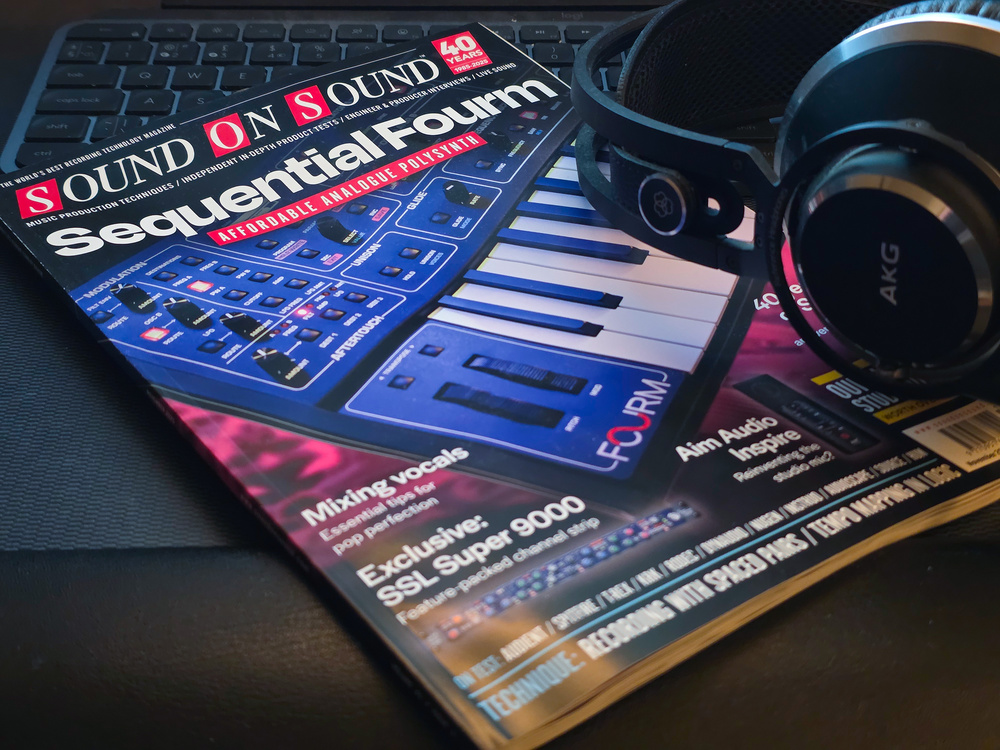
I’ve been a professional audio engineer and musician since the early 1970s, and I’ve read pretty much every recording magazine ever published. Back then the main magazines for recording engineers and amateur enthusiasts were Recording Engineer/Producer and db. Both of those magazines featured technical articles to explain theory and explore best practices. Of course, new product announcements and product reviews have always been a staple too, but the content was often technical, and always accurate. Walt Jung contributed many articles to db with schematics for DIY projects, and I wrote similarly technical articles for R E/P. Audio magic and ‘new physics’ were noticeably absent in those days, and most product advertisements included full details if not complete performance specs.
In the 1970s, if you wanted a professional quality vocal microphone you had to spend a fair amount of money for a Neumann U87 or AKG C414. I remember paying $7000 for an EMT 140 plate reverb because the only alternative was the crappy spring units found in guitar amplifiers. Magazines back then catered to recording professionals who had both the funds to buy the necessary gear, and the technical knowledge to align analogue tape machine transports and their electronics. But then things started to change. In 1972 TEAC introduced a four‑channel tape recorder at a price that was (just barely) affordable for consumers. Now aspiring home recordists could record and bounce basic tracks, and add overdubs, just like the pros using Ampex and Scully machines. When Tascam came out with their cassette‑based Portastudio in 1979 the price of admission dropped even further, though so did the fidelity! But still, with care and practice, decent‑quality recordings were possible. In 1992 the Alesis ADAT solved the quality problem, then digital recording finally took hold with the release of Windows 95. Even with those early 16‑bit soundcards, the fidelity of the recording medium was no longer the limiting factor.
As more and more amateurs eagerly bought affordable recording equipment, a new generation of recording magazines sprung up to serve this fast‑growing new audience. But this audience was less sophisticated, basically self‑taught by what they read. Worse, the writers and editors of this new generation of home recording magazine were just as ignorant as their readers. Phase and polarity were (and still are) regularly confused, and magical solutions to muddy mixes were routinely suggested via analogue summing boxes, ultra‑high sample rates, and of course famous revered tube microphones and equalisers. Rarely was the obvious problem of typical bedroom acoustics acknowledged. Further, equipment reviews became increasingly dumbed down. A loudspeaker’s woofer size might be stated, but not its low‑frequency cutoff, which obviously is what really matters. Worse, equipment reviews started to read more like ad copy than critical assessments, with wording such as “incredible smoothness” and “colour that goes on for days”.
But — and you knew I’d get here eventually — one magazine has stood out among all the others. Only one magazine has a technical editor with the depth of knowledge we see in Hugh Robjohns. Hugh’s reviews, articles, and answers to reader questions are always factual, accurate, and complete. Only one magazine has a loudspeaker expert as capable as Phil Ward. Phil’s detailed reviews include in‑depth explanations about speaker driver and enclosure theory, crossovers, and more. The Leader section in every issue, previously by Paul White and now Sam Inglis, invites readers to consider varied and interesting aspects of recording and music production. For many years Hugh and Paul visited studio owners in person to help them with their acoustics — a hugely important part of home recording that other recording magazines often ignore in favour of yet more gear praise. Every Sound On Sound product review lists both pros and cons, and the past articles comparing mic preamps and external clocks set new standards for audio journal honesty: advertisers be damned.
It’s the only magazine I trust to give me useful facts...
In a recent product review, Matt Houghton shared more generally useful information about using compression than the dedicated ‘tutorials’ I see in other magazines. Then a fabulous article by Neil Rogers explored techniques for quickly getting a good sound from toms. John Walden’s review of the Komplete 15 soft synth was thorough and highly informative, much more so than we typically see in the US magazines. Likewise for Mark Wherry’s in‑depth review of Cubase. And please don’t let me forget to mention Dave Stewart’s ongoing series of sample library reviews that are always informative, way beyond explaining the features in the current product du jour. I won’t mention the other great writers for this fine publication, but know that they are all appreciated. Long live Sound On Sound magazine! It’s the only magazine I trust to give me useful facts — real facts — instead of bullshit.